
What Is CIP? A Comprehensive Guide to Clean-in-Place Systems
By Jacqui Kennedy | June 17 2025
Contents
In the Process Industry, keeping tanks, pipework, and processing equipment clean isn’t just about aesthetics – it’s vital for product quality, regulatory compliance, and operational efficiency. Clean-in-Place (CIP) systems are the gold standard for achieving maximum tank cleanliness without the time and labour costs of dismantling your equipment. This blog explores what CIP is, why it matters, and how modern sustainable CIP technologies can reduce cleaning costs dramatically, improve efficiency, reduce system downtime and greatly improve environmental/sustainable performance.
What Is Clean-in-Place (CIP)?
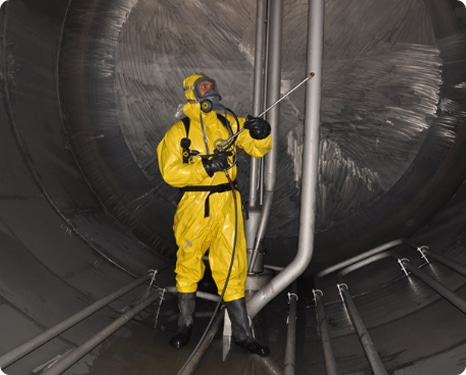
Clean-in-Place, commonly referred to as CIP, is an automated means of cleaning the interior surfaces of tanks, pipework, process equipment, and other fittings without dismantling the entire system. Cleaning and sanitising solutions are dispersed through the same pipework used in production processes, effectively cleaning all surfaces that come into contact with the product.
Unlike older methods that would need systems to be disassembled and possibly cleaned by hand, with CIP, everything can be kept in its usual operational position. This significantly reduces downtime, labour costs, and the risk of contamination during reassembly.
How CIP Systems Work
1. Pre-rinse
Removes loose buildup and product residue using ambient or warm water
2. Detergent Circulation
Alkaline or acidic cleaning agents are applied to remove stubborn residues, biofilms, and scale
3.Intermediate Rinse
Removes cleaning chemicals and remaining soils
4. Sanitisation
Applies chemical sanitisers or hot water to kill any remaining microorganisms
5.Final rinse
Removes any remaining sanitiser residue (if chemical sanitisers were used)
These steps will vary from industry to industry and according to specific product types, as will the chemicals and other particulars (water temperature, etc.).




How Did CIP Start?
Before the Second World War, almost all cleaning of tanks, pipework and processing systems was done manually. Systems would be dismantled and cleaned by hand, or soaked in a bath, then rebuilt and sanitised. This wasn’t just time-consuming, it also limited the size that some components could be. Pipes rarely came in lengths over 3m, because that would make them too unwieldy, and storage tanks were often limited to a around 2.5m tall, so an average-sized person could easily scrub their upper walls and ceilings with a brush on a pole.
A couple of systems had been patented before this point, both of which bear a resemblance to what we now call CIP today. First, in 1915, was the “Process for Cleaning Surfaces”, patented by Oliver Foster in Ohio. This machine was intended to spray a combination of water and soap onto interior and exterior surfaces in order to remove dust, dirt, oil and grease. Second, in 1927, was the “Method of Cleansing Milking Machine Units”, which was designed to clean milking machine nozzles, which were notoriously difficult to sanitise at the time. Neither of these technologies was widely adopted.
However, with the metal shortages that came as a result of the Second World War, many dairies were forced to replace steel pipework with Pyrex. These were highly prone to breakages, so dairies sought out an alternative means of cleaning that wouldn’t require disassembly. The first automated CIP system was installed in a US dairy in 1953, and from there, the technology became widespread throughout that industry by the mid-60s, and the standard in dairy facilities worldwide by the early 1980s. In the mid to late 70s, equivalent systems also started to be adopted in the Pharmaceutical Industry.
Fast-forward to the present day, and CIP systems are used in all sections of the Process Industry, and across the globe, with the total market valued at approximately $14bn in 2023.
Before

After
Why CIP Is Essential in the Process Industry
Product Quality and Safety
In Food, Beverage, Pharmaceutical, and other Process Industries, the quality of end products will depend directly on how clean the production equipment is. If cleaning is not up to standard, this can lead to:
- Cross-contamination between different batches
- Growth of harmful microorganisms
- Product spoilage and reduced shelf life
- Off-flavours or altered product characteristics
Regulatory Compliance
There are strict rules that govern cleanliness standards in most process industries. For example:
1. Food Safety Act 1990
Food manufacturers must comply with the Food Safety Act 1990 and Food Standards Agency (FSA) requirements, including HACCP principles and the Food Safety and Hygiene Regulations 2013
2. Good Manufacturing Practice
Pharmaceutical companies must adhere to UK GMP regulations as outlined by the Medicines and Healthcare products Regulatory Agency (MHRA)
3.Industry Requirements
Beverage and Dairy processors must meet the requirements set forth in the Food Hygiene Regulations and specific dairy hygiene regulations
CIP systems include documentation and validation capabilities that make it easier to comply with these regulations.
Operational Efficiency
Manual cleaning is time-consuming, labour-intensive, and puts workers at risk of harm from hot water, caustic chemicals and confined environments. By comparison, effective CIP offers several advantages:
1. Reduced production downtime
Equipment doesn’t need to be disassembled and reassembled, and – with the right technologies – even the cleaning process of CIP can be faster than manual cleaning.
2.Decreased labour requirements
CIP is often a fully automated process, or – at the very most – workers are only needed to operate manual valves or switch things over between phases of cleaning.
3. Minimised risk of equipment damage during disassembly
When purpose-built equipment with tight tolerances is being disassembled and reassembled, there is a very real risk of damage. Items can be dropped and dented, or have excessive force applied to them during dismantling that affects their dimensions.
4.Enhanced worker safety by reducing exposure to chemicals and confined spaces
With all cleaning performed by machines and no need for workers to come into close contact with hot water, chemicals or tank internals, the risk of injury is far lower.
5. Consistent, repeatable cleaning results
Being automated, CIP systems perform the same function over and over in an identical manner, eliminating human error and ensuring identical results time after time.
Traditional vs. Sustainable CIP: Why Evolution Matters
Traditional CIP systems have served the process industry well for decades, but their resource consumption has become increasingly problematic in an era of rising costs and environmental consciousness.
Challenges with Traditional CIP Systems
Traditional CIP systems typically consume:
- Large volumes of water (often potable water)
- Significant amounts of cleaning chemicals
- Substantial energy for heating water and pumping solutions
- Excessive time due to inefficient processes
These systems were designed when resources were less expensive and environmental impacts were not primary considerations. They often employ technologies like Static Spray Balls, which are highly cost-effective to buy, but require far more energy, water and time to achieve the same clean as sustainable CIP technologies.
With utilities costing more every year, and the damage being done to the environment due to human activity becoming increasingly apparent, many businesses are switching to sustainable technologies that are both eco- and budget-friendly.
The Rise of Sustainable CIP Technologies
Modern sustainable CIP technologies address these challenges by optimising resource usage while still achieving the same level of cleanliness. Low-flow, high-impact Rotary Spray Balls and Rotary Jet Heads provide far better coverage with much lower water, chemical and energy consumption.
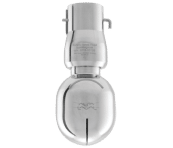
Rotary Spray Balls
Also known as Rotary Spray Heads, these devices use the flow of fluid through them to rotate, throwing out a fan of pressurised media that ensures wetting of all internal surfaces. They can come in multiple different sizes, with a range of spray patterns to suit any shape or volume of vessel, and can be easily retrofitted into tanks that use Static Spray Balls. Overall, Rotary Spray Balls can clean vessels up to 40% faster, which leads to comparable savings in water, cleaning chemical and energy consumption.
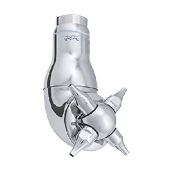
Rotary Jet Heads
Even more effective are Rotary Jet Heads. When cleaning fluid flows through a Rotary Jet Head, the head rotates around the shaft, and the nozzles around the head. The nozzles generate pressurised jets of cleaning fluid, and the rotation causes the jets to mark out a helical pattern on the walls of the tank. This is repeated – offset – each cycle, until complete coverage is achieved. By combining high pressure jets and comprehensive coverage, Rotary Jet Heads achieve thorough cleaning up to 80% faster than Static Spray Balls, greatly reducing the amount of water, chemicals and energy used. The impact of the jets also does much of the work, so cold caustic can be used instead of hot, reducing energy costs from heating water.
The Long-Term Economics of Sustainable CIP
While sustainable CIP systems may be more expensive at first, in the long-term, they are a far more economical option, offsetting their initial costs rapidly.
Direct Cost Savings
Sustainable CIP technologies deliver immediate savings on:
1. Water bills
Faster cleaning and lower flow rates mean less water per clean
2. Wastewater treatment
A reduction in water use for cleaning also reduces the amount of wastewater to be treated
3. Chemical purchases
More efficient cleaning means chemical purchases are less frequent
4. Energy costs
Faster cleaning cycles with less water reduces the energy spent on heating and pumping, lowering electricity and fuel bills
Indirect Economic Benefits
Beyond direct resource savings, sustainable CIP offers additional economic advantages:
1. Reduced maintenance costs
Less aggressive chemicals and optimised processes reduce wear on equipment
2. Extended equipment life
Proper cleaning without excessive chemical exposure increases the lifespans of cleaning technologies
3. Improved production capacity
Faster, more efficient cleaning means more time for production
4.Reduced environmental compliance costs
A smaller environmental footprint can reduce regulatory burdens
Return on Investment Analysis
A typical sustainable CIP system might show the following comparative benefits over traditional systems
| Resources | Traditional CIP | Sustainable CIP | Annual Savings |
|---|---|---|---|
| Water | 50,000 litres/day | 25,000 litres/day | 25,000 litres/day |
| Chemicals | £35,000/year | £21,000/year | £14,000 |
| Energy | 300 kWh/day | 180 kWh/day | £8,760 |
| Labour | 3 hours/day | 1.5 hours/day | £13,650 |
With potential savings of £54,660 per year in this example, even a £2,000 Rotary Jet Head would pay for itself in around 13 days.
Conclusion: The Future of CIP Is Sustainable
Clean-in-Place systems have transformed Process Industry cleaning from a manual, time-consuming task to an automated, efficient process. Today’s sustainable CIP technologies take this evolution further by dramatically reducing resource consumption while maintaining or improving cleaning effectiveness.
For companies in the Process Industry, investing in sustainable CIP is not merely an environmental choice – it’s a sound business decision that delivers compelling financial returns. By reducing water, chemical, and energy usage, these systems create immediate cost savings while positioning companies to thrive in a resource-constrained future.
As regulatory pressures increase and resources become more expensive, sustainable CIP will move from being a competitive advantage to an operational necessity. Companies that make the transition sooner will realise greater cumulative savings and avoid potential compliance challenges down the road.
The most successful operations will view CIP not as a necessary evil but as a critical process worthy of investment and optimisation—one that protects product quality, operational efficiency, and the bottom line simultaneously.
At inTank, we are the sole supplier of Alfa Laval’s sustainable CIP technologies to the UK Process Industry. With Rotary Spray Heads that use 40% less water than Static Spray Balls, and Rotary Jet Heads that use up to 80% less, customers can trust our solutions to be kind to both their budget and the planet.
Speak to the inTank team today about your CIP equipment needs.
Read Our Other Blogs
Supporting Diageo’s Maintenance Team: Two Days of Hands-On Valve, Pump and Tank Cleaning Training
With 100% Tank Cleaning Coverage.
IBC Cleaning in Food and Personal Care: How the Arcus VASA System Can Solve the Challenge
With 100% Tank Cleaning Coverage.
Cleaner Tanks, Lower Costs: A New Approach for Speciality Chemical Manufacturers
With 100% Tank Cleaning Coverage.