1A Goodsons Mews, Wellington Street, Thame, OX9 3BX

Can’t find what you’re looking for?
Get in touch today.
Popular Search Terms
Brewery Industry
Case Study
In conventional fermentation tanks, the wort (liquid containing fermentable sugars derived from grains) and yeast aren’t forced to mix. In the industry, it is generally assumed that the mixing from convection currents and rising CO2 bubbles is sufficient.
However, tank capacity has increased dramatically over the years, and it’s possible that contact between yeast and fermentable sugars is now reduced, making fermentation less effective.
The work of Chris Boulton et al has shown for the first time that in a large (1800 hl) fermentation tank, poor mixing causes yeast to settle at the bottom too early.

Making Fermentation More Effective
Following a technical presentation by Alfa Laval, Carlsberg saw the potential of the ISO Mix rotary jet mixing technology for speeding up their fermentation process. They immediately started rigorous testing of the system at their Northampton site, working closely with Alfa Laval and Tank Cleaning Technologies, UK.
The trials took place over three to four months, using the plant’s largest capacity vessel – a 4800 hl treatment tank converted to a fermenter using the IsoMix technology.
As the plant produces Tuborg, Holsten and Skol as well as Carlsberg, the testing involved fermenting each one, which meant using a variety of yeast strains over multiple generations. Alongside potential fermentation time savings, yeast viability, foam stability, Real Degree of Fermentation (RDF) and taste were also studied.
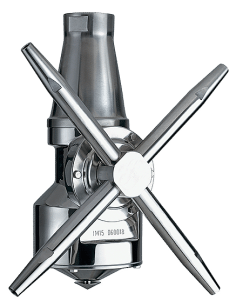
For the Northampton plant, as a result of adding the mixing technology, fermentation is faster, the yeast’s quality, stability and fermentation capabilities are maintained, and the beer’s final properties and taste are unaffected.
Fermentations are also more consistent, so predictions of when beer is ready to filter and yeast ready to be harvested are more accurate, which has improved planning. The ISO-MIX is turned off so the yeast will settle for harvesting. This improves viability as it means the yeast doesn’t sediment in the cone of the vessel, compressing and warming up.
Having determined they could achieve the potential fermentation time savings without compromising beer quality, Carlsberg decided it wouldn’t just install ISO MIX equipment in its larger fermentation tanks but in ten storage/maturation tanks as well. Each of these had a 4800hl capacity, and would be converted for fermentation by adding a heat exchanger for extra cooling. This was to maintain the correct process temperature during fermentation, and enable fast crash cooling.
27 tanks of various types, with capacities from 2,400 to 6,000 hl, have now been fitted, with scope for more, if needed. The increased capacity produced by this technology has also allowed the brewery to remove 57 smaller fermentation vessels which are now redundant.
These benefits were achieved with a low flocculent property yeast strain. For very flocculent strains, the benefits will likely be even higher.
Using the Alfa Laval ISO MIX rotary jet mixer, the plant has dramatically cut fermentation time, without interrupting beer production.
This has, in part, helped Carlsberg increase its beer-making capability from 4.5 to 6.5 mhl to meet higher production targets. This technology’s success could well benefit the entire brewing industry.